How Predictive Maintenance Technologies Improve Reliability
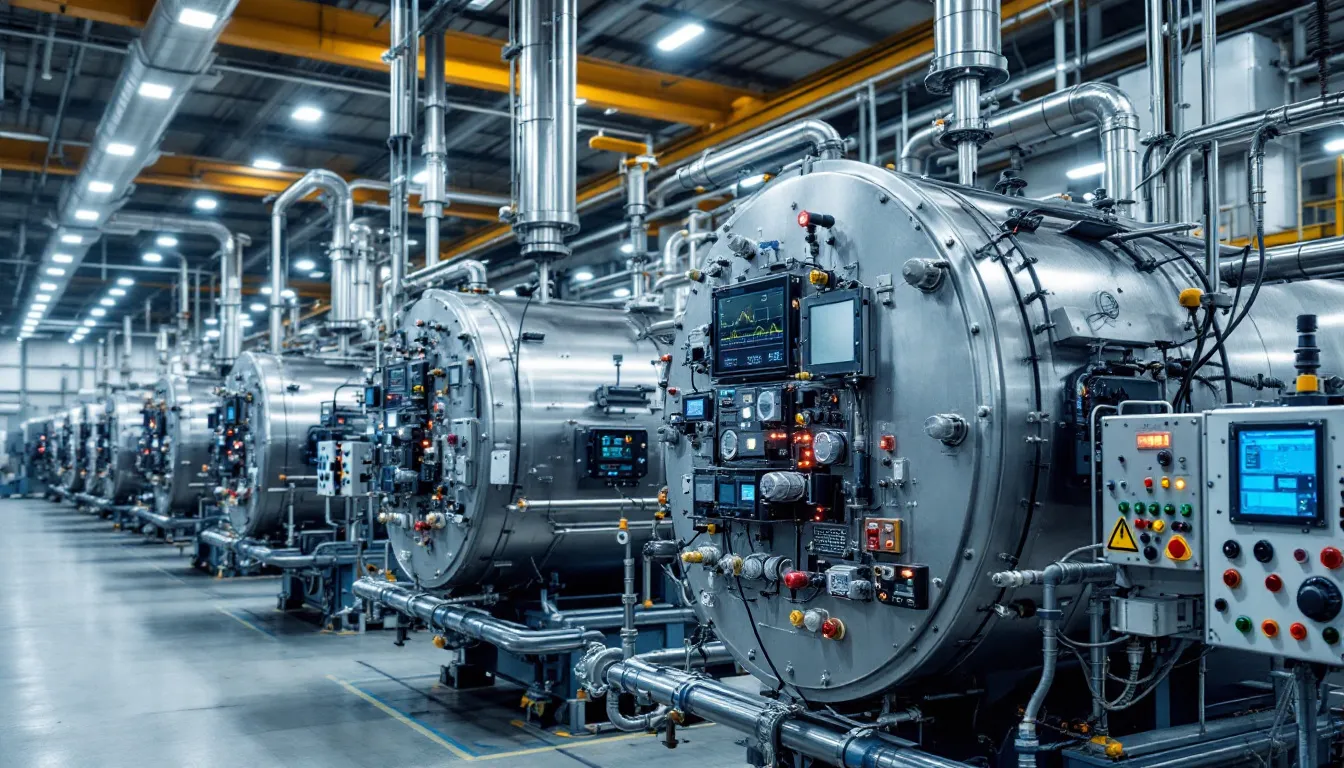
In many industrial and water treatment facilities, the difference between smooth operations and unexpected downtime comes down to knowing your equipment before it fails. Predictive maintenance gives teams that insight, turning streams of sensor data and historical performance into clear signals about which machines need attention and when. Rather than waiting for failures or sticking to rigid schedules, operators can take targeted action, protecting equipment, improving safety, and making maintenance resources work smarter.
In this article, we’ll walk through how predictive maintenance technologies function, the types of equipment and parameters they track, and how facilities can translate these insights into real-world reliability and efficiency improvements.Why Predictive Maintenance Matters
Predictive maintenance technologies are changing how industrial facilities approach reliability. Instead of relying solely on fixed preventive maintenance schedules, maintenance teams now use real-time equipment data to understand what’s happening inside their systems and act before a failure disrupts production. The shift is practical, not theoretical. It gives operators clearer insight, better timing, and more control over uptime.- They give maintenance teams real visibility. Sensors feeding vibration, temperature, pressure, and flow data help teams see early warning signs that were previously hidden. Small deviations become actionable insights, reducing guesswork and unplanned scrambling.
- They strengthen preventive maintenance instead of replacing it. A predictive maintenance technique doesn’t eliminate scheduled PM. Instead, it makes it smarter. Operators can adjust intervals, prepare parts in advance, and intervene only when the data supports the need.
- They work best when tied into a computerized maintenance management system (CMMS). When data flows into a CMMS, teams can prioritize tasks, track asset history, and understand how each intervention affects performance and cost. It turns maintenance into a coordinated, data-backed process.
- They improve planning across operations. With clearer equipment trends, facilities can schedule downtime strategically, allocate labor more efficiently, and avoid the chain reactions that a single failure can cause upstream or downstream.
- They explain why the industry is shifting. Plants aren’t adopting predictive maintenance technologies for novelty. They’re doing it because the approach reduces disruption, supports compliance, and delivers measurable operational stability.
Core Technologies and Condition Monitoring Tools
Modern condition monitoring is built on a simple idea: the earlier you catch changes in equipment performance, the easier it is to prevent equipment failures. Sensor data gives operators that early visibility. Instead of relying only on sounds, smells, and intuition (the traditional clues), plants now use digital tools to track how rotating machinery, pumps, motors, and process equipment behave under real-world operating loads. Each technology captures a different dimension of equipment health, and together they give maintenance teams a full picture of what’s changing, why, and how urgently they need to act. These tools enhance operator judgment. When operators know what early signs look like, they can intervene long before downtime or safety risks emerge. The following subsections outline the core technologies used across industrial facilities and what teams should watch for during day-to-day operations.3.1 Vibration Monitoring
Vibration analysis is one of the strongest predictors of mechanical issues in rotating machinery. Sudden increases in vibration often point to imbalance, misalignment, bearing damage, or looseness developing inside pumps, blowers, and motors. Trend shifts tell operators whether a condition is slowly worsening or accelerating quickly. When operators receive vibration changes early, they can schedule corrections before the problem spreads, preventing the cascade of equipment failures that often follow unchecked mechanical wear.3.2 Temperature Monitoring
Temperature is one of the simplest, most widely used forms of sensor data. Overheating frequently signals lubrication issues, electrical overloads, clogged cooling passages, or friction buildup. Thermal patterns also help identify components that are drifting away from normal operating conditions. Even small temperature deviations can indicate a developing fault, especially in motors, bearings, and critical heat-dependent processes.3.3 Pressure and Flow Sensors
Pressure and flow tell operators how efficiently a system is moving water, chemicals, air, or steam. Drops in pressure may reveal blockages, fouling, pump wear, or leaks. Unexpected increases may point to valve restrictions or strain on upstream equipment. Flow instability is often the earliest detectable sign that something in the system is starting to drift. Monitoring these parameters continuously allows teams to correlate mechanical and hydraulic behavior, catching issues that would otherwise go unnoticed until production is affected.3.4 Acoustic Monitoring
Acoustic monitoring identifies high-frequency noise patterns that the human ear can’t detect. These ultrasonic signatures can pinpoint steam trap failures, air leaks, cavitation in pumps, or electrical arcing. Because acoustic shifts happen early in the failure curve, they often serve as an advanced warning before vibration or temperature changes appear. Operators can use these insights to isolate problems while equipment is still running safely.3.5 Oil Analysis
Oil analysis provides a chemical and particulate snapshot of equipment health. By examining wear metals, viscosity changes, contamination, and additive depletion, maintenance teams can see inside the lubrication system without opening equipment. Increases in metallic particles often signal internal component wear, while water or chemical contamination can point to seal failures or process intrusion. Regular sampling gives operators a reliable trendline, critical for extending the life of high-value assets.Advanced Analytics: Machine Learning, Predictive Models, and Connected Systems
As plants collect more real time sensor data from pumps, motors, and critical equipment, the value comes not from the raw numbers, but from what advanced technologies can interpret within them. Machine learning, predictive models, and connected systems transform routine readings into forecasts operators can act on. Instead of waiting for a parameter to drift far outside normal limits, data analytics and predictive analytics help teams understand how equipment is trending under real operating conditions and what failure modes may develop next. These insights allow maintenance teams to intervene earlier, plan repairs more strategically, and protect uptime where it matters most.- Machine learning models identify patterns operators can’t catch manually. By analyzing thousands of small variations across temperature, flow, vibration, and electrical behavior, machine learning detects subtle correlations that indicate a developing issue. Predictive algorithms recognize early-stage faults long before they would appear in standard thresholds or operator walk-throughs.
- Predictive models use historical behavior to forecast future outcomes. These models look at how critical equipment has responded to similar loads, cycles, and environmental conditions over time. When current operating conditions show signs of repeating a previous failure pattern, the system flags the risk early, giving teams a chance to intervene before the issue escalates.
- Real time sensor data strengthens accuracy and reduces false alarms. When continuous readings feed into predictive analytics tools, the models refine themselves. The more data they receive, the better they understand what “normal” looks like for each asset. This reduces unnecessary maintenance while improving reliability for equipment with variable demand or challenging duty cycles.
- Connected systems unify data across equipment, processes, and software. Integrating predictive models with SCADA, PLCs, and maintenance platforms gives operators a single view of equipment performance. This connectivity allows maintenance teams to correlate events, linking pressure changes in one area to vibration increases in another, and understand systemwide health instead of isolated symptoms.
- Analytics guide decision-making for maintenance, production, and compliance. With clearer forecasting, plants can schedule downtime during low-impact windows, prepare parts in advance, and reduce emergency callouts. For industries where compliance depends on stable processes, predictive algorithms help ensure that equipment stays within safe, controlled limits.
Building and Implementing a Predictive Maintenance Program
Implementing predictive maintenance is a strategic shift in how maintenance teams protect assets and optimize operations. A well-structured predictive maintenance program gives teams insight into equipment health, reduces unplanned downtime, and improves operational efficiency. For most facilities, success starts small: selecting pilot assets, collecting baseline data, and gradually scaling up as the organization adapts. Maintenance technicians play a central role in this transition, bridging the gap between sensor insights and actionable maintenance tasks. Here’s how teams typically build and implement a predictive maintenance program:- Identify and prioritize critical assets. Begin by ranking equipment based on production impact, safety risk, and replacement cost. Focusing on a few high-value or high-risk assets allows maintenance teams to test predictive maintenance solutions with measurable results before rolling out facility-wide.
- Collect data and establish baselines. Gather at least 3–6 months of operational data using sensors, CMMS logs, and historical maintenance records. Understanding normal operating conditions helps predictive algorithms accurately identify anomalies, reducing false alarms and unnecessary interventions.
- Select appropriate predictive maintenance technologies. Choose sensors, vibration analysis tools, oil analysis programs, and acoustic monitoring systems that align with your critical equipment and failure modes. Integration with your computerized maintenance management system ensures collected data transforms into actionable insights for scheduling and reporting.
- Train maintenance technicians and staff. Ensure your team understands new technologies, how to interpret equipment health trends, and how to respond to predictive alerts. Training should also cover CMMS integration, proper documentation, and prioritization of maintenance tasks to maximize efficiency.
- Develop maintenance schedules and workflows. Use predictive insights to replace rigid preventive maintenance schedules with flexible, condition-based interventions. This approach reduces unnecessary maintenance, lowers maintenance costs, and allows resources to focus where they have the most impact.
- Start with a pilot program and iterate. Implement predictive maintenance on selected assets, monitor results, and refine workflows. Early wins help demonstrate value, build team confidence, and establish best practices for broader rollout.
- Scale and integrate across the facility. Gradually expand predictive maintenance coverage to secondary equipment and interconnected systems. Continuously collect data, monitor equipment health, and adjust maintenance strategies to improve operational efficiency and reduce unplanned downtime.
ROI, Cost Savings, and What Teams Actually See Over Time
When predictive maintenance programs are implemented thoughtfully, the results are clear and measurable. Maintenance organizations quickly notice fewer unplanned shutdowns, smoother operations, and better use of resources. Teams often report that equipment reliability improves within months, while overall operational efficiency climbs as interventions shift from reactive to proactive. These early wins build confidence in predictive maintenance solutions and help justify broader program expansion. Key benefits observed over time include:- Extended equipment lifespan. By catching potential equipment failures early and addressing them before they escalate, predictive maintenance extends equipment lifespan. Bearings, motors, pumps, and rotating machinery operate more consistently, avoiding wear patterns that would otherwise shorten life expectancy.
- Reduced maintenance costs. Predictive strategies reduce unnecessary interventions and emergency repairs. Planned downtime replaces reactive shutdowns, letting teams schedule maintenance during low-impact periods. This approach minimizes labor costs, reduces parts waste, and avoids the high expense of crisis management.
- Improved operational efficiency. Equipment that runs predictably allows for smoother production cycles and fewer interruptions. Teams can optimize workflows, reduce bottlenecks, and focus on preventive tasks that deliver tangible performance improvements.
- Early detection of potential equipment failures. Sensor data and analytics alert teams to emerging issues before they escalate. Catching small anomalies early protects critical assets and prevents cascading failures that would impact safety and production.
- Measurable ROI for the organization. Many facilities achieve a payback period within 12–18 months, thanks to cost savings, reduced downtime, and extended equipment lifespan. Over time, metrics like mean time between failures, maintenance costs per unit, and planned downtime trends provide concrete evidence of program effectiveness.
Making Predictive Maintenance Work for Your Facility
Building a successful predictive maintenance strategy starts with understanding your equipment components, their specific failure modes, and how each contributes to overall operating costs. Teams often find that combining predictive maintenance with other maintenance strategies, like preventive or condition-based approaches, creates the most balanced, resilient program. The key is tailoring your approach to the unique needs of your facility rather than following a one-size-fits-all schedule. Here are practical steps to make predictive maintenance effective:- Assess equipment components and criticality. Map out all assets and determine which components have the highest impact on production, safety, and costs. Focus first on critical machinery where failures carry the greatest consequences.
- Identify common failure modes. Use historical data, operator insights, and sensor readings to understand how equipment typically fails. Knowing whether wear, misalignment, lubrication issues, or electrical faults are most common guides which predictive technologies to deploy.
- Choose appropriate predictive technologies. Select sensors, monitoring tools, and analytics solutions that match the failure modes and operating conditions of each asset. For some equipment, vibration analysis or motor circuit monitoring is ideal, while others benefit more from oil analysis or thermal imaging.
- Integrate with existing workflows. Predictive maintenance works best when integrated into daily maintenance tasks, CMMS platforms, and scheduling practices. Teams should have clear procedures for responding to alerts, documenting interventions, and adjusting schedules based on equipment health trends.
- Continuously refine and innovate. Collect data, review outcomes, and adjust your predictive maintenance strategy as conditions, equipment, and operational goals evolve. Leveraging innovative solutions ensures your program remains effective and aligned with broader efficiency and cost-reduction objectives.
