Solids in wastewater, ranging from grit and coarse debris to fine colloids and oils, pose serious challenges to treatment plants. Left untreated, they can foul membranes, plug filters, reduce hydraulic capacity, and degrade downstream system performance. At ProChem Water, we design, fabricate, and service high-performance solids removal systems that protect your treatment train, reduce maintenance demands, and improve effluent quality. Our solutions are tailored for industrial and municipal applications, offering reliable performance, modular flexibility, and long-term operational efficiency.
Why Solids Removal Matters
Removing solids early in the treatment process protects downstream infrastructure from abrasion, clogging, and fouling in membranes, filters, pumps, and biological reactors. Effective solids removal also improves water quality, reduces turbidity, and helps facilities consistently meet permit limits or reuse standards.By decreasing the solids load upstream, downstream units like ultrafiltration, nanofiltration, reverse osmosis, and biological reactors operate more efficiently and reliably. Optimized solids removal lowers maintenance needs, reduces chemical usage, and minimizes operational disruptions, while modular systems provide high performance in compact layouts and offer flexibility for phased upgrades or retrofits.
Key Solids Removal Technologies
Effective solids removal relies on multiple technologies, often used in combination, to optimize performance for wastewater treatment. ProChem Water selects and configures each method based on your solids characteristics, flow rates, footprint, and treatment goals.
Screening & Coarse Solids Removal: Coarse screens, bar racks, or sieves remove large debris such as plastics, rags, and oversized particles, protecting pumps and downstream equipment. Acting as the first barrier, screening establishes a cleaner feed for all subsequent treatment stages and reduces maintenance frequency.
Grit Removal / Sedimentation: Grit chambers or aerated basins target heavy inorganic particles like sand and small stones that can erode equipment. Primary settling and gravity sedimentation further remove heavier solids, improving system efficiency and protecting downstream units.
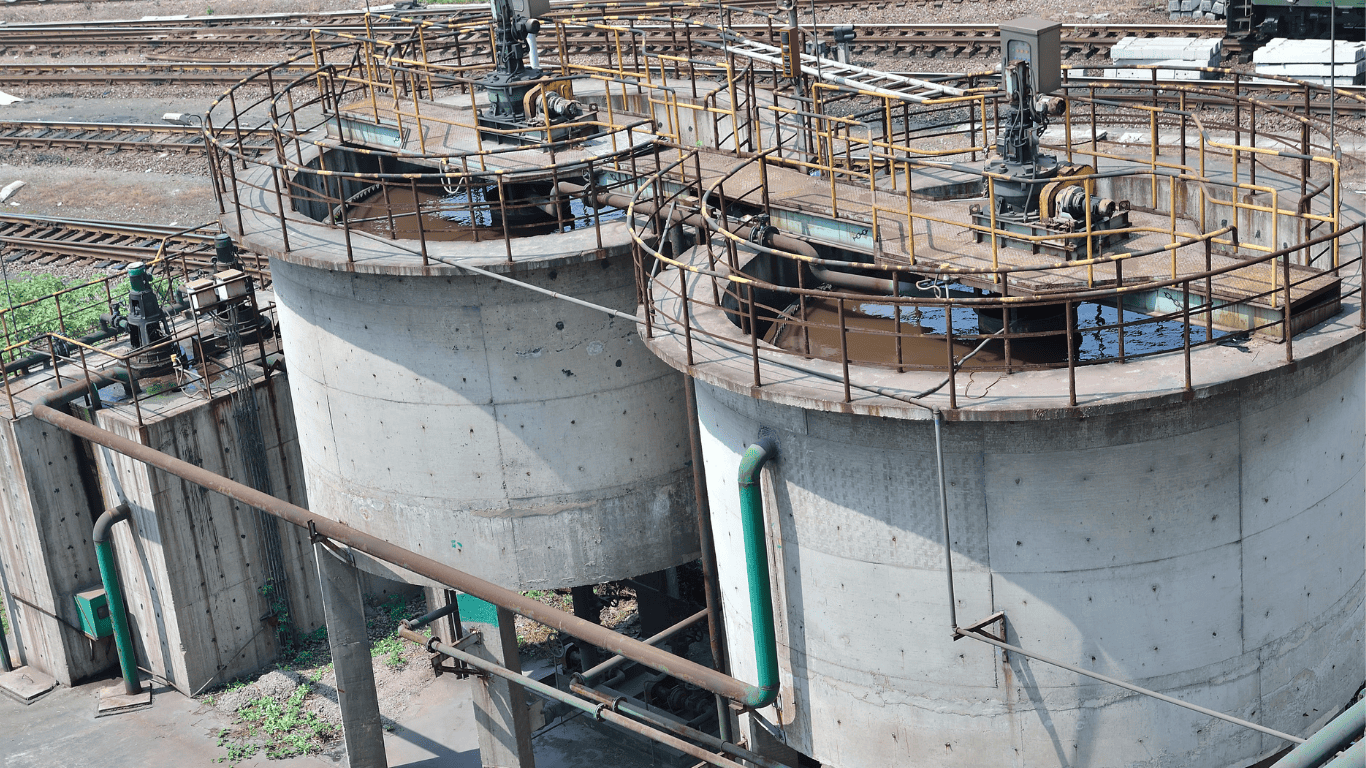
Clarifiers & Lamella / Plate Settlers: Clarifiers allow solids to settle as sludge, while lamella or inclined plate settlers shorten settling distances, boost throughput, and reduce footprint. Baffles, feed distribution, and sludge hoppers ensure uniform flow and minimize turbulence for consistent removal.
Dissolved Air Flotation (DAF): Fine air bubbles attach to lighter particles and oils, making them float for skimming and removal. DAF is ideal for high-rate solids separation, oily streams, or cases where conventional settling is insufficient.
Filtration & Cloth / Media Filters: After primary removal, multimedia, cloth, or depth filters polish the water, removing fine solids and residual TSS. These filters provide a reliable finishing step for applications requiring high effluent clarity.
Mechanical Dewatering: Concentrated solids are processed through belt presses, centrifuges, or filter presses to reduce water content and create manageable sludge cake. Proper dewatering ensures safer, more cost-effective solids handling and disposal.
Design Principles & Best Practices
Effective solids removal starts with understanding the solids themselves: their size, composition, and variability. This ensures the right technology is selected and equipment is properly sized for consistent performance.Flow management is critical. Proper hydraulics prevent short-circuiting or resuspension, while chemical conditioning with coagulants or flocculants helps aggregate fine or colloidal particles for easier removal.Modular and packaged designs offer flexibility and scalability, while maintenance access, instrumentation, and durable materials ensure reliable operation, reduced downtime, and long-term system resilience.
ProChem Water’s Solids Removal Systems & Services
ProChem Water provides end-to-end solutions for solids removal, ensuring your wastewater treatment process operates efficiently, reliably, and with minimal disruption. Our services cover everything from initial evaluation and custom design to installation, optimization, and long-term support, tailored to the unique characteristics of your facility’s water and solids load.
Pilot & Bench Testing: We evaluate your wastewater under real conditions, testing screening, settling, flotation, or filtration. This identifies optimal solids removal pathways, chemical dosages, and equipment sizing for your specific stream.
Custom System Engineering: ProChem engineers design clarifiers, DAF units, filters, or hybrid combinations to meet your performance goals, footprint requirements, and operational constraints. Every system is tailored to your plant’s unique needs.
Prefabricated / Modular Skids: To minimize field risk and construction time, we provide preassembled modular solids removal systems. These units are fully tested and ready for rapid integration into your treatment process.
Installation & Commissioning: Our field teams handle civil tie-ins, piping, instrumentation, startup, calibration, and performance validation. Operator training ensures your staff can run the system confidently from day one.
Service, Performance Monitoring & Optimization: Ongoing support includes system monitoring, flocculant dosing adjustments, backwash scheduling, and performance tuning to maintain optimal operation as solids loads fluctuate.
Retrofit & Upgrade Services: Existing plants can benefit from retrofits such as lamella pack additions, DAF modules, upgraded skimmers, or modular system conversions to enhance solids removal efficiency.
Dewatering and Sludge Handling Integration: Concentrated solids are converted into manageable cake using belt presses, centrifuges, or filter presses, reducing disposal costs and improving operational safety.
Applications & Use Cases
Solids removal is essential wherever wastewater treatment relies on protecting equipment, improving effluent quality, and meeting regulatory standards.Municipal plants use it to safeguard membranes and filters, while industrial facilities prevent fouling and maintain consistent operation. Food and beverage, pulp and paper, and chemical plants rely on effective solids management to handle organic matter, fibers, and pigments, protecting downstream processes. Metal finishing and electroplating capture sludge and precipitates, and oil, gas, and petrochemical operations remove solids and oils from process water. In reuse and zero-discharge systems, upstream solids removal ensures high-quality water and reliable system performance.
Benefits & Return on Investment
Optimized solids removal delivers measurable benefits across the entire wastewater treatment process. By protecting downstream membranes, filters, and biological units, it reduces maintenance, downtime, and replacement costs, while improving overall effluent quality and helping facilities meet regulatory requirements.Operational efficiency is enhanced through lower chemical and energy use, and compact, modular designs allow phased upgrades or expansions without major construction. Facilities gain predictable, stable performance across variable flows and solids loads, translating into long-term cost savings, improved reliability, and extended equipment lifespan.
Getting Started with ProChem’s Solids Removal Solutions
Share Your Data – Provide details on wastewater flow rates, typical solids loading (TSS, particle size), and treatment goals to help us understand your process.
Submit Samples – Send representative water or sludge samples for characterization and preliminary settling or flotation testing.
Pilot Evaluation & System Modeling – We test your samples and model clarifier, DAF, filtration, or hybrid options to identify the optimal solids removal approach.
Design & Proposal – ProChem develops a tailored solution, selecting modules, clarifier or flotation configuration, filtration, dewatering options, and instrumentation.
Fabrication & Modular Assembly – Systems are preassembled with skids, control panels, structural components, and piping, minimizing on-site construction time.
Installation, Startup & Commissioning – Field teams handle installation, calibration, performance validation, and operator training to ensure smooth operation from day one.
Ongoing Monitoring & Optimization – Continuous support includes performance tracking, maintenance, and system optimization to adapt to changing solids loads over time.
Next Step
Ensure your wastewater treatment operates efficiently and reliably with ProChem Water’s advanced solids removal solutions. Talk to our team to discuss pilot testing, system design, or modular upgrades, and start optimizing your treatment performance today.
 Solids in wastewater, ranging from grit and coarse debris to fine colloids and oils, pose serious challenges to treatment plants. Left untreated, they can foul membranes, plug filters, reduce hydraulic capacity, and degrade downstream system performance.
At ProChem Water, we design, fabricate, and service high-performance solids removal systems that protect your treatment train, reduce maintenance demands, and improve effluent quality. Our solutions are tailored for industrial and municipal applications, offering reliable performance, modular flexibility, and long-term operational efficiency.
Solids in wastewater, ranging from grit and coarse debris to fine colloids and oils, pose serious challenges to treatment plants. Left untreated, they can foul membranes, plug filters, reduce hydraulic capacity, and degrade downstream system performance.
At ProChem Water, we design, fabricate, and service high-performance solids removal systems that protect your treatment train, reduce maintenance demands, and improve effluent quality. Our solutions are tailored for industrial and municipal applications, offering reliable performance, modular flexibility, and long-term operational efficiency.
