
In industrial and municipal wastewater treatment, reliable solids separation defines system performance. For streams containing fine suspended particles, oils, greases, and other light contaminants, dissolved air flotation (DAF) offers one of the most efficient clarification methods available.
At ProChem Water, we engineer DAF systems and skids that align with your influent conditions, discharge requirements, and operational goals. Whether your facility needs a compact skid-mounted unit or a large-scale integrated installation, our systems are designed to remove solids, protect downstream processes, and deliver consistent effluent quality under real-world conditions.
How Dissolved Air Flotation Works
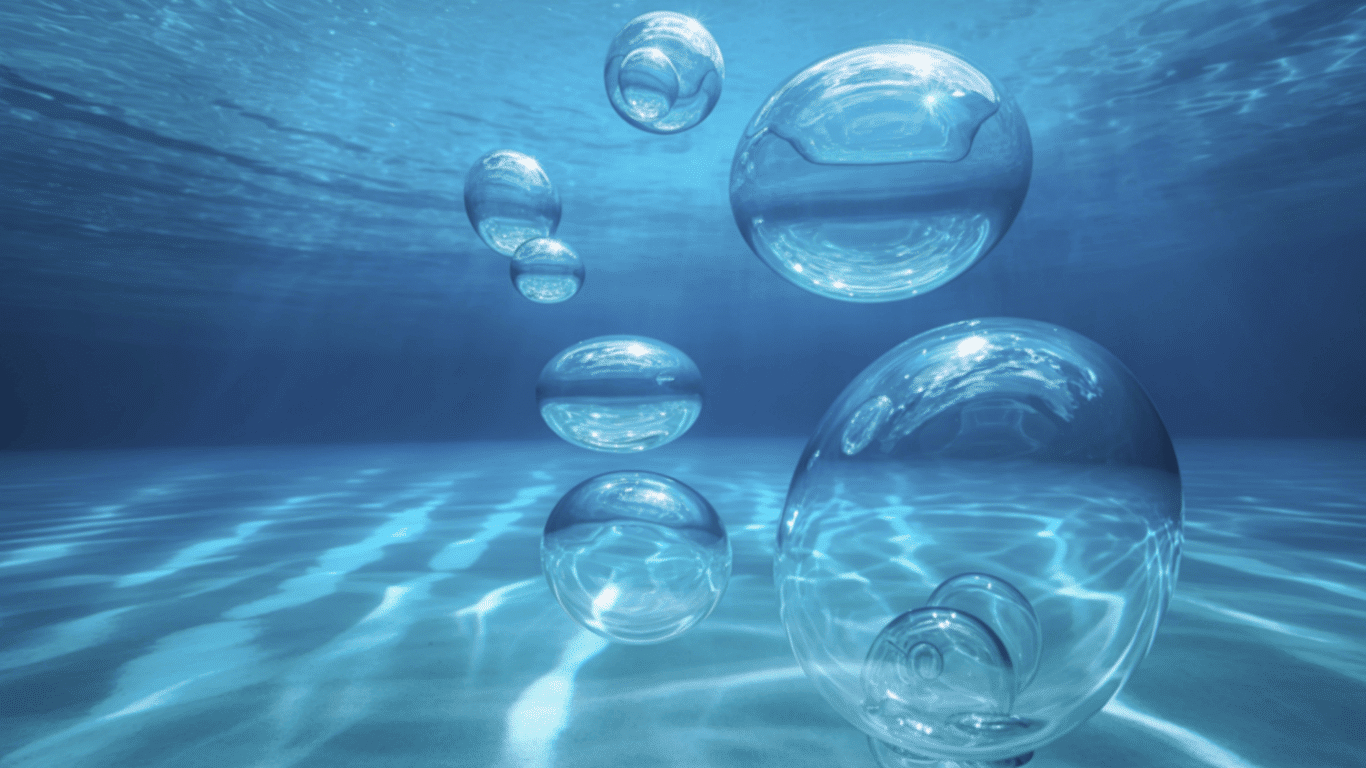
DAF technology separates fine solids by introducing air under pressure into a flotation chamber, then releasing it at atmospheric conditions. As the air expands, millions of microbubbles form and attach to suspended particles, reducing their density and allowing them to float. The accumulated solids are skimmed from the surface, while clarified water exits below through precision weirs.
This simple principle is extraordinarily effective where traditional sedimentation falls short, especially with fine or emulsified materials that resist settling.
Chemical conditioning enhances the process. By applying coagulants and flocculants before flotation, we encourage stronger floc formation and better bubble attachment. When combined with controlled pH and optimized mixing, the result is clear, stable water and denser, more manageable sludge.
Engineered for Industrial Applications
ProChem’s DAF systems serve industries where conventional settling cannot meet performance or space requirements. They are widely used in:
- Food and Beverage Processing – For removing fats, oils, and organic matter from production wastewater while maintaining discharge compliance.
- Pulp and Paper Operations – To recover fibers, lower BOD, and stabilize clarification for recycling or discharge streams.
- Oil and Gas Facilities – For treating produced water and refinery effluent containing emulsified oil and suspended solids.
- Metal Finishing and Chemical Manufacturing – For high-strength wastewater that demands precise, automated clarification.
- Municipal and Reuse Systems – As a pretreatment or polishing step that enhances overall system reliability and water reuse potential.
Inside a ProChem DAF System
Every DAF system we build reflects the same engineering priorities: reliability, maintainability, and process efficiency.
- Influent Distribution and Whitewater Generation. The process begins with evenly distributed influent to maintain hydraulic balance. A dedicated whitewater system, combining recycle pumps and air saturators, creates the microbubble-rich stream that drives flotation efficiency.
- Flotation and Solids Collection. Inside the tank, buoyant solids rise to form a surface layer, continuously removed by skimmers or scraper flights. Concentrated sludge is collected in a hopper for dewatering or disposal, while clarified water flows out below.
- Controls and Automation. To keep performance stable, ProChem integrates flow, pressure, turbidity, and level sensors into automated control panels. These systems manage recycle flow, skimmer operation, and chemical dosing, minimizing operator workload and maintaining consistent effluent quality.
- Skid-Mounted Integration. For facilities that value fast deployment and minimal on-site construction, our DAF skids combine all major components, flotation tank, air saturator, pumps, controls, and piping, into one preassembled, factory-tested unit. This design approach shortens installation time and provides plug-and-play reliability.
Designed for Reliable Performance
Effective DAF performance begins long before fabrication. We start with comprehensive influent analysis, measuring TSS, oil and grease, COD, pH, and flow variations, to guide system sizing, recycle ratios, and chemical conditioning.
Our engineers fine-tune whitewater generation and bubble dynamics, typically recycling 15–30% of clarified water under pressure to maintain optimal air-to-solids ratios. Proper control of bubble size and distribution ensures uniform attachment and consistent removal efficiency.
Tank geometry and hydraulic balance are equally important. We design each system to maintain even flow, prevent short-circuiting, and sustain high solids recovery. Combined with advanced automation, operators can easily monitor and adjust key parameters, skimmer speed, recycle flow, and chemical dosing, to adapt to real-world variability.
All ProChem systems are constructed using corrosion-resistant materials such as stainless steel, coated carbon steel, or reinforced composites. Each unit is built for long-term durability, safe maintenance access, and minimal downtime.
Benefits and Long-Term Value
A well-engineered DAF system strengthens the entire operation. From improving compliance margins to reducing lifecycle costs, every aspect of ProChem’s design is focused on measurable, lasting value.
- Superior Solids and Oil Removal – Each system is engineered for high-efficiency separation of total suspended solids (TSS), fats, oils, and greases. The result is consistently clear, compliant effluent that protects your discharge limits and stabilizes plant performance.
- Downstream Equipment Protection – By removing solids and organic load early in the process, the DAF system safeguards your downstream filtration, biological, and membrane units. This reduction in fouling and wear extends the lifespan of critical components and minimizes unplanned maintenance.
- Compact, Efficient Footprint – Compared to traditional sedimentation systems, DAF achieves rapid separation in a smaller footprint. It’s an ideal solution for existing facilities with limited space or for new installations requiring efficient, high-throughput clarification.
- Lower Chemical and Sludge Handling Costs – Optimized air and polymer dosing reduce reagent use, while the formation of thicker, more concentrated sludge simplifies handling and lowers hauling costs. The result is cleaner operation with measurable savings over time.
- Automated Reliability – ProChem’s DAF systems are built for steady, predictable operation. Integrated controls and rugged, corrosion-resistant construction ensure consistent results, minimal operator attention, and dependable performance year after year.
Why Partner with ProChem
Choosing ProChem means partnering with an engineering team that takes ownership from day one. We build systems that integrate seamlessly into your process and continue performing long after startup. Our approach covers every stage:
- Consultation & Data Review – We begin by learning about your operation in detail: influent characteristics, treatment goals, site constraints, and process priorities. This understanding forms the foundation of every system we design.
- Sample Analysis & Bench Testing – Using your wastewater samples, we conduct targeted testing to identify the ideal chemical conditioning and whitewater generation parameters. These results guide system design with real data.
- Pilot Evaluation – Before full-scale fabrication, we validate key design parameters through pilot or jar testing. This step confirms separation efficiency, air-to-solids ratios, and chemical performance under real conditions.
- System Design & Proposal – Our engineers develop a complete system plan: sizing, layout, control logic, and integration details, along with a cost analysis aligned to your operational objectives and return expectations.
- Fabrication & Testing – Each DAF skid is built and tested in our facility under controlled conditions. We verify hydraulics, controls, and structural integrity before shipment to ensure smooth installation and immediate functionality.
- Installation & Commissioning – During field setup, our engineers oversee calibration, parameter tuning, and performance verification to ensure your system meets design standards and discharge requirements from day one.
- Ongoing Optimization & Support – Our commitment doesn’t end at startup. We provide operator training, maintenance guidance, and long-term technical support to keep your system running efficiently and reliably over its entire lifecycle.
Talk to ProChem Water
Operational stability starts with reliable solids separation. If your facility needs dependable clarification that protects downstream systems and reduces lifecycle costs, ProChem Water’s DAF systems deliver proven, engineered performance.
Let’s discuss how a tailored DAF solution can strengthen your process reliability and return on investment. Connect with our engineering team today.
