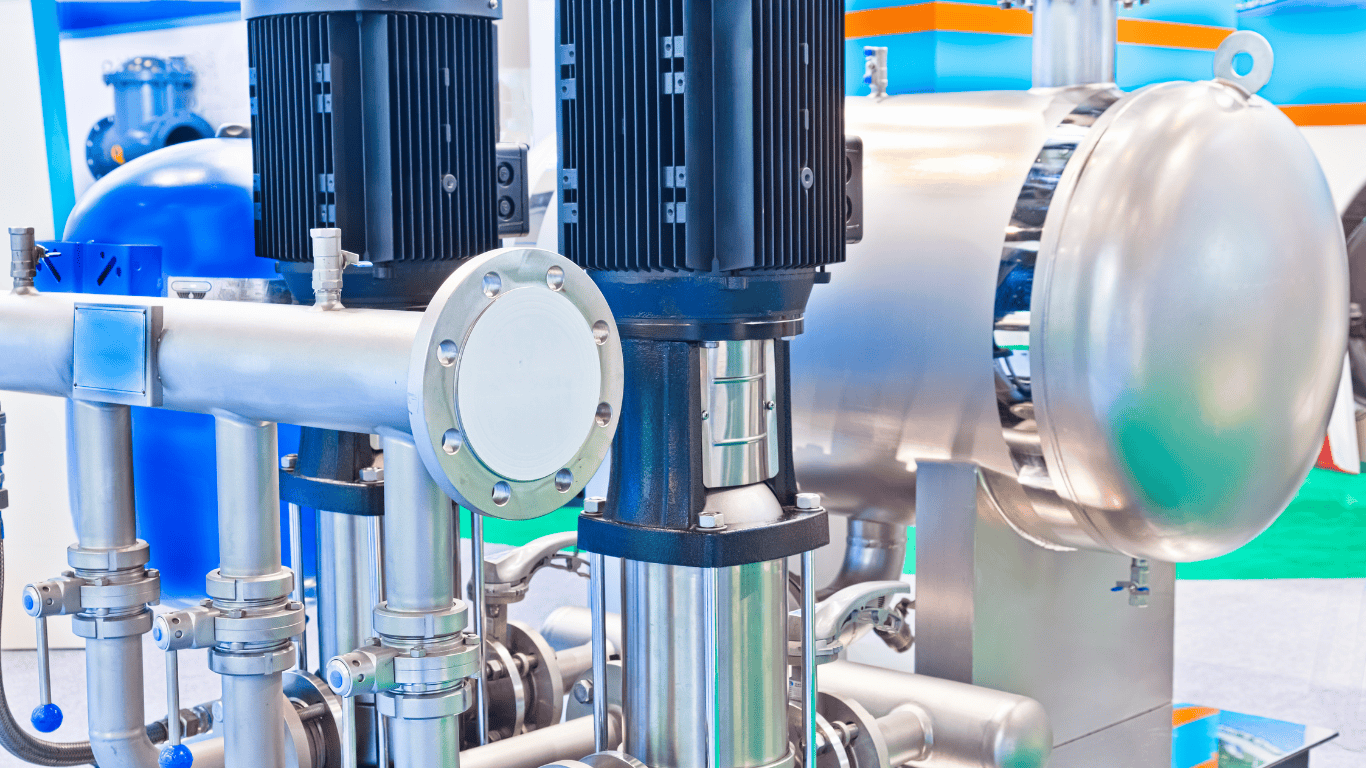
Running a plant has a way of teaching you what matters. Over the years, we've walked into facilities where a single drift in conductivity brought entire operations to a standstill. It’s a reminder that high-purity water is a safeguard for boilers, turbines, and every process that depends on stable chemistry. That’s the lens we bring to demineralization.At ProChem Water, we build DI systems and service programs that eliminate the uncertainty. You have enough moving parts to manage; water purity shouldn’t be one of them. Starting from engineered systems up to fast-moving service and parts support, our goal is to keep your plant protected, predictable, and ready for whatever the day throws at it.
What Is Demineralization / Deionization?
Demineralization removes dissolved ionic contaminants: calcium, magnesium, sodium, chloride, sulfate, nitrate, and more, to produce water with extremely low conductivity or high resistivity. The process relies on ion exchange resins, arranged as separate cation and anion beds or combined in mixed-bed configurations, replacing unwanted ions with hydrogen and hydroxide that form pure water.In heavy industrial environments, demineralized water is often the backbone of boiler feed systems, cooling loop makeup, power generation assets, electronics manufacturing, and pharmaceutical processes. Many modern trains now integrate RO pretreatment or EDI polishing for higher efficiency, reduced chemical consumption, and extended resin life. The goal is always the same: stable purity, predictable performance, and lower lifecycle cost.
Types of Demineralization Systems
Before we recommend a demineralization approach, we look closely at how your facility runs: your purity targets, duty cycles, and the pressures placed on your treatment train. Different DI configurations offer different advantages, and selecting the right one can make the difference between stable performance and recurring troubleshooting. Here’s how the main system types compare and where each fits best.
1. Two-Bed / Separate-Bed Systems
The classic industrial configuration: a cation vessel followed by an anion vessel. It’s straightforward, durable, and meets the purity requirements for many power, steam, and process applications where mixed-bed or EDI polishing may not be necessary.
2. Mixed-Bed Systems
For clients needing tighter conductivity or resistivity targets, mixed beds provide a higher level of polishing in a single vessel. They’re often positioned downstream of two-bed systems or RO to ensure ultra-low ionic leakage.
3. Electrodeionization (EDI)
EDI brings continuous resin regeneration through an applied electric field, greatly reducing, or eliminating, the need for chemical regenerants. Plants that need consistent high-purity water, and want to avoid handling acids and caustics, often choose EDI as part of an RO/EDI train.
4. Modular, Skid, and Containerized Systems
Many facilities prefer modular integration. We support skid-mounted, containerized, or plug-and-play DI systems designed for quick deployment, efficient footprint use, and straightforward retrofit into existing piping or control infrastructure.
Key Design Considerations
Before specifying a demineralization system, we take a hard look at your water chemistry, performance requirements, and operational realities. This step is critical: resin life, regeneration frequency, and long-term reliability all hinge on getting this configuration right.Key factors include:
Feedwater characteristics: TDS, hardness, silica, organics, chlorine, pH, and conductivity. These dictate pretreatment needs and resin selection.
Flow and duty cycle: Peak vs. steady-state flow, transient surges, and minimum turndown to avoid resin channeling.
Product water quality targets: Conductivity, resistivity, silica limits, and downstream equipment sensitivities.
Pretreatment requirements: Filtration, softening, RO, or carbon treatment to protect resin health.
Regeneration strategy: Chemical dosage, waste handling, safety considerations, and regulatory compliance.
Mechanical and control design: Piping layout, pressure drop, automation level, instrumentation, and safety interlocks.
Redundancy: Parallel trains, bypass capability, and service access for predictable uptime.
When we design a system, we build in the operational margin required for real-world variability, not lab conditions, so your system performs day in and day out.
ProChem Water: Demineralization System Capabilities
A demineralization system is only as strong as the engineering, support, and lifecycle planning behind it. That’s why we’ve built a capability set that covers every phase. Our goal is simple: deliver consistent purity, predictable operation, and a service structure that minimizes downtime and protects your long-term investment.
1. Custom System Engineering
Every facility has unique water challenges, and we design DI systems that fit your water profile, purity targets, footprint limitations, and integration requirements. We weigh the benefits of two-bed, mixed-bed, and EDI configurations, balancing capital cost with long-term operating efficiency.
2. Turnkey Installation & Commissioning
Our team manages the full lifecycle, starting from layout and utility connections up to resin loading, instrumentation setup, startup testing, and performance validation. We don’t sign off until the system is running to spec and your team is comfortable operating it.
3. Service, Maintenance & Preventive Care
Keeping a DI system healthy is not a set-and-forget task. We help extend resin life, prevent breakthrough, and maintain predictable water quality through services such as:
Capacity testing and ionic loading analysis
Flow and pressure diagnostics
Review and tuning of regeneration cycles
Inspection and replacement of valve components, seals, and internals
Resin cleaning, reconditioning, or replacement
Instrument calibration and control logic updates
Well-timed maintenance avoids resin fouling, incorrect chemical dosing, unnecessary shutdowns, and any other issues we’ve helped countless plants navigate before they escalate.
4. Parts, Resin & Consumables
Downtime is expensive, so we keep critical DI parts moving fast:
Cation, anion, mixed-bed, and specialty resins
Acid and caustic regenerants
Valves, manifolds, piping, filters
Gaskets, seals, distributors, and O-rings
Conductivity, resistivity, and flow instrumentation
Vessel internals and hardware
OEM or compatible components are available depending on your system’s age and design.
5. Retrofits, Upgrades & Expansion
When an existing DI system starts underperforming, or when production demands increase, we help extend capability without a full replacement. Common upgrades include:
Adding polishing stages (mixed-bed or EDI)
Improving regeneration controls
Replacing aged resin with newer, higher-capacity media
Reworking plumbing or valve schemes for better flow control
Increasing throughput or adding parallel trains
6. Remote Monitoring & Optimization
We integrate sensors, controls, and data platforms to keep a close eye on conductivity drift, pressure buildup, and breakthrough events. Early alerts allow proactive intervention before quality or uptime is compromised.
Advantages & ROI
A well-designed and properly serviced demineralization system pays dividends across your facility:
Consistent, high-purity water for boilers, turbines, or sensitive manufacturing lines
Lower fouling, corrosion, and scaling in downstream equipment
Reduced chemical costs and safer regeneration practices
Extended resin lifetime and fewer emergency replacements
Faster recovery from excursions due to readily available parts
Lower lifecycle cost by balancing CAPEX and OPEX
Built-in scalability for future plant growth or tighter water specs
For high-value industrial assets, stable DI performance isn’t optional. It’s an operational insurance policy.
Typical Applications & Industries
Every facility has unique demands, and the right demineralization system can make the difference between smooth operations and costly downtime. In industries where water purity is critical, a reliable DI system safeguards equipment, ensures consistent process quality, and reduces operational risk. Our solutions are designed to meet these exacting requirements across a variety of industrial applications:
Power plants and high-pressure boiler systems: Delivering demineralized water that prevents scaling and corrosion, ensuring reliable steam generation and turbine performance.
Cooling tower makeup and blowdown recovery loops: Protecting recirculation systems from mineral buildup and extending the life of heat exchangers.
Semiconductor, electronics, and precision manufacturing: Maintaining ultra-low ionic water necessary for sensitive processes and high-yield production.
Pharmaceutical and laboratory-grade water production: Supporting stringent quality standards with consistent, repeatable water purity.
Food and beverage formulation: Ensuring product quality and taste consistency while reducing fouling or contamination risks.
Chemical processing and low-ion environments: Controlling ionic content to protect reactors, membranes, and other precision equipment.
Steam generation and CHP facilities: Providing high-quality feedwater to prevent scaling, maintain efficiency, and protect expensive assets.
How to Get Started with ProChem’s Demineralization Offering
Getting started is simple: we evaluate your water profile, flow requirements, and purity targets, then design a DI system and service plan tailored to your facility’s needs. Our approach ensures reliable performance from day one and long-term operational confidence.Contact ProChem Water today to discuss your demineralization goals and let our team design a solution that protects your equipment, ensures compliance, and keeps your operations running smoothly.
 Running a plant has a way of teaching you what matters. Over the years, we've walked into facilities where a single drift in conductivity brought entire operations to a standstill. It’s a reminder that high-purity water is a safeguard for boilers, turbines, and every process that depends on stable chemistry. That’s the lens we bring to demineralization.
At ProChem Water, we build DI systems and service programs that eliminate the uncertainty. You have enough moving parts to manage; water purity shouldn’t be one of them. Starting from engineered systems up to fast-moving service and parts support, our goal is to keep your plant protected, predictable, and ready for whatever the day throws at it.
Running a plant has a way of teaching you what matters. Over the years, we've walked into facilities where a single drift in conductivity brought entire operations to a standstill. It’s a reminder that high-purity water is a safeguard for boilers, turbines, and every process that depends on stable chemistry. That’s the lens we bring to demineralization.
At ProChem Water, we build DI systems and service programs that eliminate the uncertainty. You have enough moving parts to manage; water purity shouldn’t be one of them. Starting from engineered systems up to fast-moving service and parts support, our goal is to keep your plant protected, predictable, and ready for whatever the day throws at it.
